Motivation
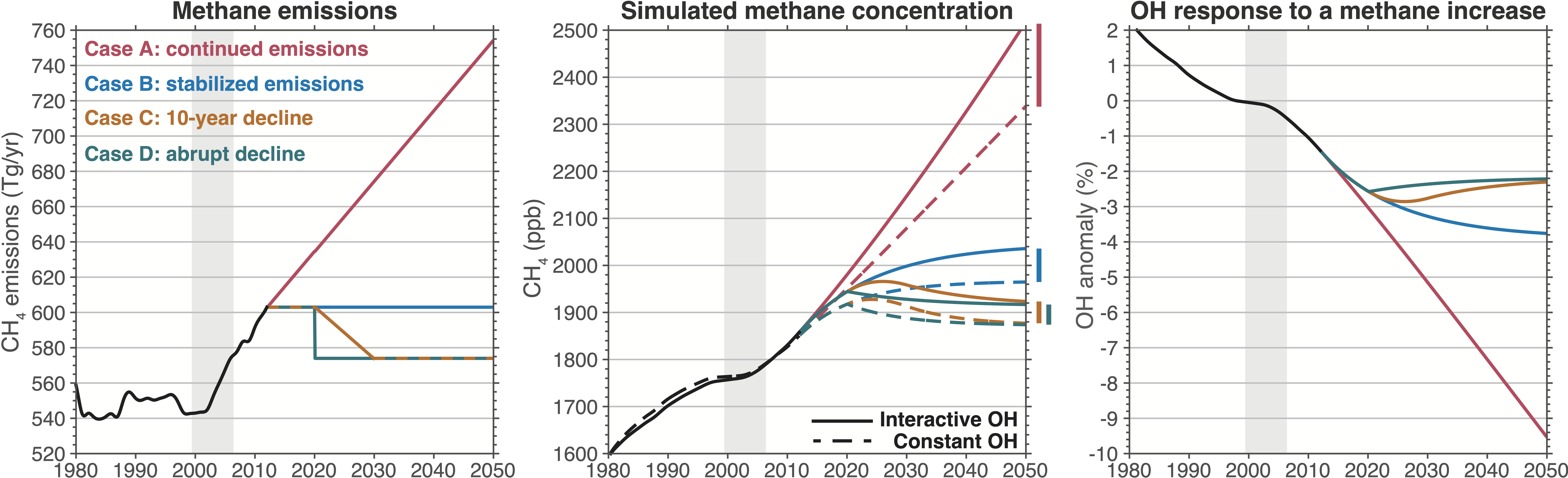
Methane is a potent greenhouse gas with a relatively short atmospheric lifetime, making it a key driver of near-term climate change and an important target for mitigation strategies. Future atmospheric methane concentrations will be shaped by the combined influence of human emissions, climate-driven feedbacks, and changes in atmospheric chemistry.
Projecting future methane trajectories is complicated by uncertainties in both natural and anthropogenic processes. Warming temperatures, altered precipitation patterns, and ecosystem responses may substantially affect natural methane emissions, while changes in air quality and climate policy will influence anthropogenic sources and sinks. A robust understanding of these interacting factors is required to assess the potential range of future methane outcomes and their implications for climate.
Key Research Questions
- How will climate change affect natural methane sources such as wetlands and permafrost?
- How sensitive is methane lifetime to future changes in atmospheric oxidants?
- What uncertainties limit current projections of future methane concentrations?
- How can improved observational constraints inform mitigation strategies?
Relevance to FETCH4
By linking insights from past and present methane variability, FETCH4 provides a framework for improving future projections. The project’s integrated approach supports more reliable assessments of methane-climate feedbacks and the effectiveness of mitigation efforts.