Motivation
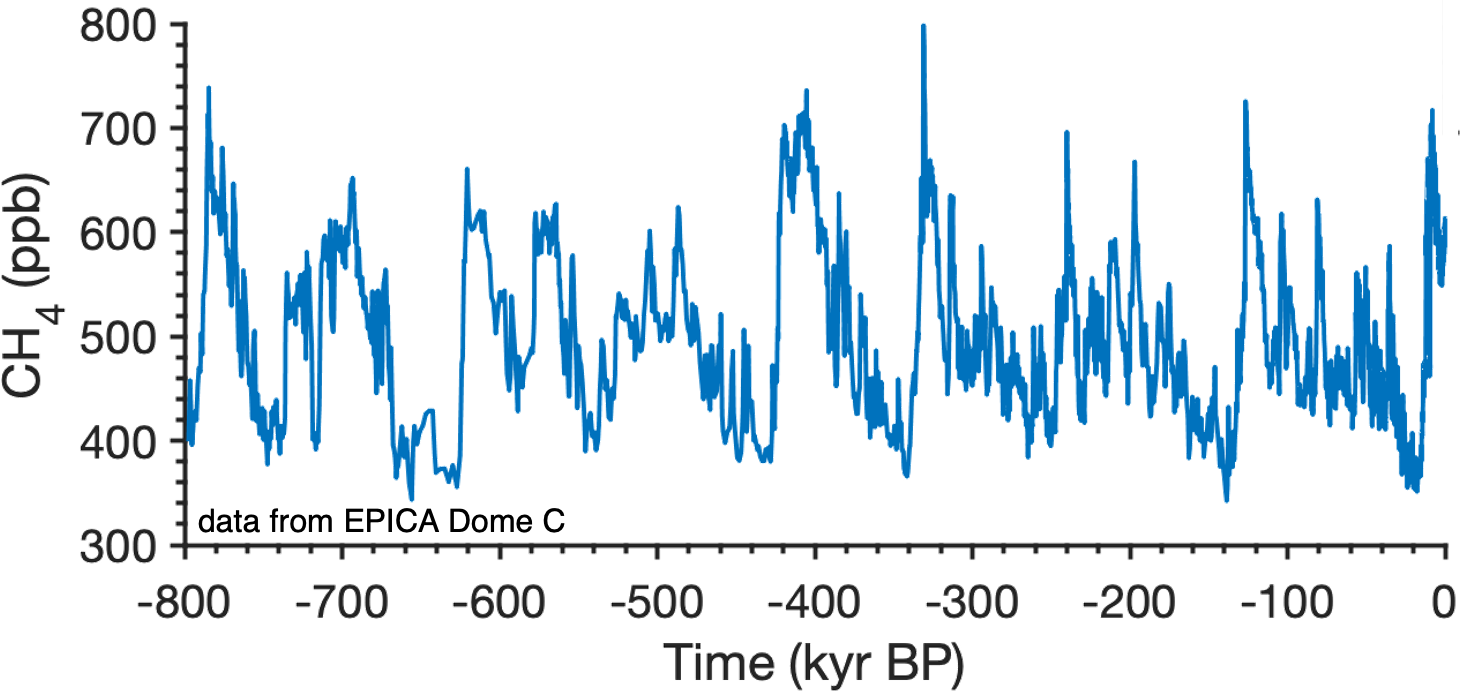
Methane has varied substantially over glacial-interglacial cycles and during abrupt climate transitions, reflecting changes in natural emissions, atmospheric chemistry, and large-scale climate dynamics. Ice-core records spanning hundreds of thousands of years reveal pronounced shifts in atmospheric methane concentration associated with changes in temperature, hydrology, and ecosystem extent, as well as rapid reorganizations of the climate system.
These variations occurred under climate states markedly different from today and in the absence of large-scale anthropogenic emissions. As a result, the past methane cycle provides a unique opportunity to isolate natural controls on methane sources and sinks, including wetland extent, biomass burning, geological emissions, and the oxidative capacity of the atmosphere. Understanding how these processes operated in past climates is essential for establishing a physically grounded baseline against which modern and future methane changes can be evaluated.
Key Research Questions
- What processes controlled methane emissions during glacial, deglacial, and early Holocene periods?
- How did changes in atmospheric oxidants, particularly OH, regulate methane lifetime under past climate states?
- What roles did wetlands, biomass burning, geological sources, and abrupt climate events play in driving observed methane variability?
- How can ice-core measurements of methane and related tracers be used to constrain coupled climate-chemistry models?
Relevance to FETCH4
FETCH4 integrates measurements, modeling, and machine learning to reconcile proxy records with mechanistic understanding. By combining ice-core observations with Earth system simulations, the project aims to quantify natural methane variability and its controlling factors across past climate regimes.